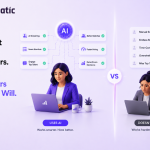
Your recruiter is not underperforming. Your recruiter is underwater.
Managing twelve open roles simultaneously. Screening 150 resumes for one position. Chasing hiring managers for feedback. Scheduling interviews across three time zones. Following up with candidates who have gone quiet. Updating the ATS between each task.
None of this is hiring. It is administration. And it is consuming the time your recruiter should be spending on conversations that actually close candidates.
The good news is that every task on that list, except the conversations, can now be handled by AI recruitment tools. Here is how to use them to give your team back the hours that matter.
Why Recruiter Productivity Breaks Down
Before reaching for tools, it helps to understand where recruiter time actually goes.
Research from LinkedIn found that 93% of recruiters plan to increase their use of AI tools in 2026, a signal that the industry has reached a breaking point with manual workflows. The problems driving that shift are consistent across teams:
Screening volume is unsustainable. A recruiter reviewing resumes manually can assess 20 to 30 applications per hour. At 150 applications per role, across eight open positions, that is weeks of screening before a single meaningful conversation happens.
Coordination overhead compounds. Interview scheduling, calendar alignment, follow-up emails, feedback collection, each task takes minutes individually and hours collectively across a full requisition load.
Context-switching kills depth. A recruiter jumping between screening, scheduling, and candidate communication never goes deep on any one role. Shortlists suffer. Candidates feel the lack of attention. Hiring managers lose trust in the process.
These are not effort problems. They are system problems. And AI recruitment tools are built to fix them at the root.
Five Ways AI Recruitment Tools Improve Recruiter Productivity
1. Automate resume screening, end the pile entirely
The single largest productivity drain in recruiting is manual resume review. AI candidate shortlisting evaluates every application against the actual role requirements, skill depth, experience quality, career trajectory and delivers a ranked shortlist with clear reasoning in hours, not days.
Recruiters stop reading 150 resumes and start calling the ten candidates most worth their time. The World Economic Forum’s Future of Jobs Report confirms that AI’s biggest impact on knowledge work is removing routine cognitive tasks, freeing professionals to focus on judgment-dependent decisions. Recruiting is no exception.
2. Surface the right candidates conversationally, no filters required
Time spent navigating ATS dashboards, applying filters, and cross-referencing candidate lists is time not spent hiring. Conversational AI in recruiting changes this entirely.
Instead of building a Boolean search or clicking through dropdown menus, a recruiter asks: “Show me the top five Java developers who applied in the last two weeks and match our last three hires.”
The system returns a ranked answer with reasoning, not a list to manually evaluate. This alone saves experienced recruiters 60+ hours across a full hiring cycle.
3. Eliminate interview scheduling back-and-forth
Scheduling is the silent time thief of recruiting. Finding a slot that works for a candidate, two interviewers, and a hiring manager can take days of email exchanges. AI scheduling tools connect to calendars and handle this coordination automatically, presenting available slots, confirming attendance, and sending reminders without recruiter involvement.
A task that took 45 minutes per candidate becomes zero minutes per candidate.
4. Keep candidates warm automatically
Candidates go cold when communication slows down. A strong applicant who hears nothing for five days has already mentally moved on. AI recruitment tools send personalised, contextual follow-ups at the right moments, keeping candidates engaged between stages without the recruiter manually tracking each one.
The result is fewer dropped candidates and a stronger experience for everyone who moves through your pipeline.
5. Rediscover past applicants instantly
Every ATS holds a database of candidates from previous roles. Most recruiters never revisit it, searching that database manually takes longer than starting fresh. An agentic hiring platform surfaces relevant past applicants automatically when a new role opens, matching them against the current requirements and flagging the best fits before a single new application arrives.
This alone compresses time-to-hire on repeat roles significantly.
What Productive Recruiting Looks Like With AI Tools
Before AI recruitment tools: A recruiter’s day is 60% screening, scheduling, and administration. The 40% left for conversations happens at the end of the day when energy is lowest.
After AI recruitment tools: Screening is automated. Scheduling runs itself. Follow-up is handled. The recruiter spends 70% of their day in conversations with candidates, with hiring managers, building relationships, and closing offers.
The output is not the same work done faster. It is fundamentally different work. Higher-quality shortlists. Faster pipeline velocity. Stronger candidate relationships. Better hires.
Sanju L, Global Head of Talent Acquisition at Zycus, experienced this directly. The previous tool claimed AI capabilities, in practice, it was still manual screening with a better interface. Switching to Talismatic moved the team’s time from administration to conversations, cutting shortlisting time by 85%.
How Talismatic Improves Recruiter Productivity
Talismatic combines three layers of AI that together address every productivity drain described above.
Agentic AI handles the process proactively, evaluating applications as they arrive, flagging risks, and rediscovering past candidates without waiting for a recruiter to act.
Contextual AI evaluates candidate fit with genuine depth, skill quality, experience relevance, career trajectory, not keyword matching. Shortlists that hiring managers actually trust.
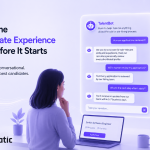
Conversational AI lets recruiters interact with hiring data in plain English, no dashboards, no filters. Ask a question, get a ranked answer with reasoning.
The result: 85% faster shortlisting. 60+ recruiter hours saved per hiring cycle. A team spending its time on work that requires human judgment, not the work a system should be doing.
See how Talismatic improves recruiter productivity on your open roles. Book a 20-minute demo →
The most impactful AI recruitment tools focus on three areas: candidate shortlisting (removing manual resume review), conversational search (replacing dashboard navigation), and scheduling automation (eliminating coordination overhead). Platforms that combine all three, like Talismatic, deliver the highest productivity improvement because they remove the entire administrative layer of recruiting, not just individual tasks.
Teams using AI candidate shortlisting and automated scheduling report saving 60+ hours per hiring cycle. The biggest gains come from replacing manual resume screening, a process that takes 2–3 days manually and 4 hours with AI shortlisting, and eliminating interview scheduling back-and-forth, which typically consumes 30–45 minutes per candidate across a full process.
AI recruitment tools improve hire quality when they evaluate candidate fit contextually, assessing skill depth, experience quality, and career trajectory, rather than matching keywords. Tools that provide explainable rankings allow recruiters to validate every recommendation, ensuring the human judgment that determines final hiring decisions is informed, not replaced.
Recruiter burnout is primarily caused by high-volume, low-judgment work, screening hundreds of resumes, managing scheduling logistics, and updating systems manually. AI recruitment tools remove this layer entirely, allowing recruiters to focus on the high-judgment, high-satisfaction work: building candidate relationships, advising hiring managers, and closing strong hires.
- Your Career Site Is More Than a Hiring Tool. It’s a Reflection of Your Brand
- AI Is Reducing the Number of People Companies Need. So How Do You Make Every Hire Count?
- Not Every Application Means Interest: The Hiring Signal Recruiters Are Missing
- Empowering Recruiters With AI: How to Prepare Them for the Next Era of Hiring
- When Every Candidate Uses AI, How Does TalentAI Find the Signal That Still Matters?