Hiring has evolved, but the application experience hasn’t kept up at the same pace. While sourcing has become smarter and outreach more personalized, the moment candidates hit the “Apply” button, they’re often pulled back into outdated workflows. Long forms, repetitive inputs, and unclear next steps still define much of the process.
This gap between expectation and experience is where drop-offs begin. And as AI in recruitment continues to reshape how companies evaluate talent, it’s also exposing a critical truth: the problem isn’t a lack of candidates, it’s a lack of completion.
The first 60 seconds decide everything
The moment a candidate lands on your application page, they’re making a rapid decision: Is this worth my time? Even small friction points, too many fields, unclear requirements, or slow interactions, can push them away before they even start.
This is where an AI recruiting chatbot changes the interaction entirely. Instead of asking candidates to navigate a static form, it engages them in a guided flow. The experience feels lighter, more responsive, and easier to complete, keeping candidates moving forward rather than dropping off.
The form problem: too much, too soon
Traditional ATS flows are built around data collection, not candidate experience. They demand complete information upfront, resume uploads, manual entries, and repeated fields that often duplicate existing data.
A well-designed AI chatbot for recruitment flips this approach. It collects information progressively, extracts data from resumes, and only asks what’s necessary. This reduces effort at the point of entry and significantly improves completion rates. It’s a practical example of how AI in recruitment can streamline processes without compromising depth.
Lack of clarity slows candidates down
One of the biggest but least discussed reasons for drop-off is hesitation. Candidates pause when they don’t fully understand the process, what’s expected, how long it will take, or what happens after submission.
An AI recruiting chatbot removes this ambiguity by guiding candidates in real time. It clarifies requirements, answers questions instantly, and provides a clear sense of progression. That continuous feedback loop keeps candidates engaged through completion instead of leaving them uncertain midway.
Poor job matching creates early exits
Another major reason candidates abandon applications is simple: the role doesn’t feel like the right fit. Often, candidates only realize this after they’ve already started the process, leading to wasted effort and eventual drop-off.
This is where an AI chatbot for recruitment plays a more proactive role. By analyzing resumes upfront and aligning candidates with the most relevant roles, it ensures better job matching before the application even begins. Instead of pushing every candidate into a single job flow, the system guides them toward opportunities that actually fit their profile. This improves both completion rates and candidate quality, one of the more strategic advantages of AI in recruitment.
Poor alignment between role and candidate expectations
Even when candidates find a relevant role, misalignment can still occur. Job descriptions are often vague or overly broad, leaving candidates unsure if they truly meet the criteria.
An AI recruiting chatbot helps bridge this gap early in the process. By asking contextual questions and dynamically sharing role expectations, it ensures candidates have a clearer understanding before committing time. This reduces mid-way drop-offs and leads to more intentional applications, another example of how AI in recruitment improves both efficiency and experience.
How to fix it, without rebuilding everything
Reducing drop-offs doesn’t require a complete overhaul of your hiring stack. The most effective changes are often at the interaction layer:
- Reduce unnecessary effort at the start
- Guide candidates instead of overwhelming them
- Provide real-time clarity and feedback
- Improve job-role alignment early
- Personalize the application journey
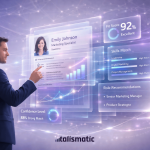
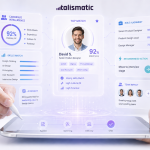
This is where an AI recruiting chatbot like TalentBot by Talismatic, becomes a critical layer in modern hiring systems. Instead of forcing candidates through rigid workflows, it adapts the experience to how people naturally interact, through conversation. A well-implemented AI chatbot for recruitment doesn’t just improve completion rates; it improves the overall quality of the hiring funnel. That’s the real impact of AI in recruitment.
Bringing it together
Most hiring teams focus on attracting more candidates. But often, the bigger opportunity lies in converting the candidates you already have.
The shift is subtle but important, from collecting applications to guiding candidates. From static forms to dynamic interactions. From effort-heavy processes to seamless experiences.
This is the direction modern hiring is moving in. And products like TalentBot, built within the broader Talismatic platform, are designed around exactly this shift, turning the application process into a guided, conversational experience that keeps candidates engaged from the first click to final submission.
Because in the end, better hiring doesn’t just start with better candidates; it starts with making sure they actually complete the journey.