Between the moment a candidate clicks “Apply” and the point they’re invited to interview, a lot happens.
But very little of it is structured, visible, or truly intelligent.
This is the stage where most hiring inefficiencies quietly build up. Applications accumulate, recruiters work through them under time pressure, and decisions are made with limited context. What should be a clear evaluation phase often turns into fragmented signals, manual effort, and delayed action.
This is the hidden hiring gap.
It’s not about sourcing or interviews. It’s about everything in between, where candidates are processed, but not fully understood.
The Most Critical Stage That Gets the Least Attention
Most hiring conversations focus on attracting candidates and selecting them through interviews.
But the middle stage, between application and shortlist, is where outcomes are shaped.
This is where recruiters decide:
- Who gets shortlisted
- Who gets rejected
- Who gets overlooked
And yet, this stage is rarely designed with intent.
Instead, it depends on manual resume screening, individual judgment, and time constraints.
In high-volume environments, recruiters are expected to process large numbers of applications quickly, which leads to surface-level evaluation.
The result is a system that moves candidates forward, but not always the right candidates.
How the Hidden Hiring Gap Forms
The gap builds gradually as hiring scales.
At first, processes feel manageable. But as volumes increase, screening becomes faster, not deeper. Keywords start replacing context. Patterns get missed.
In reality, recruiters often spend just a few seconds on a single resume. At that pace, it becomes nearly impossible to understand the full context behind a candidate’s experience.
Over time, a few issues show up:
- Volume overwhelms evaluation: Recruiters spend more time managing applications than understanding them
- Inconsistency increases: The same profile can be interpreted differently by different recruiters
- Strong candidates get filtered out early: Not because they aren’t qualified, but because their value isn’t obvious
- Decisions slow down: Delays in screening impact the entire hiring cycle
At this point, the process still works, but it’s no longer optimized for clarity or quality.
Why Traditional Systems Struggle to Close the Gap
Most organizations rely on an applicant tracking system to manage this stage.
But the limitations of applicant tracking systems become clear here.
They were designed to organize hiring, not to evaluate it.
They store resumes, track stages, and manage workflows. But they don’t interpret data or generate meaningful insights.
Even an advanced intelligent applicant tracking system has limits if it doesn’t support deeper AI candidate evaluation.
As a result:
- Screening remains manual
- Evaluation lacks consistency
- Insights stay fragmented
The system supports the process, but not the decisions within it.
The Cost of the Hidden Hiring Gap
This gap has a direct and compounding impact on hiring outcomes.
When candidates aren’t evaluated effectively:
- Quality of hire drops because strong candidates are missed
- Time-to-hire increases due to inefficient screening
- Recruiter productivity declines
- Candidate experience suffers due to delays
But the real impact goes deeper.
Weak early-stage decisions shape everything that follows. Interview pipelines fill with misaligned candidates, hiring managers lose confidence in shortlists, and interview quality declines because the foundation is flawed.
Teams end up spending more time correcting decisions than making better ones.
The gap doesn’t stay contained. It spreads across the funnel, affecting speed, quality, and business outcomes.
Closing the Gap with Intelligence, Not Just Automation
Many teams have tried to fix this with automation.
But automation only speeds up tasks. It doesn’t improve decisions.
Closing the gap requires intelligence.
This is where modern AI recruitment software and AI hiring platforms are changing how this stage operates, enabling more data driven hiring decisions.
Instead of just moving candidates forward, these systems improve how candidates are evaluated.
What Changes When Evaluation Becomes Intelligent
When intelligence is introduced, screening becomes structured and consistent.
Systems can:
- Analyze profiles beyond keywords
- Identify patterns in experience and growth
- Highlight strengths, gaps, and role fit
With resume screening automation software and automated candidate screening, recruiters work with surfaced insights instead of raw data.
This leads to key improvements:
- Consistency improves
Evaluations follow structured frameworks - Speed increases
Insights are surfaced early - Better candidates move forward
Decisions are based on a deeper understanding - Recruiters focus on high-value work
Less time on screening, more on decision-making
From a Blind Spot to a Decision Layer
This is where platforms like Talismatic come in.
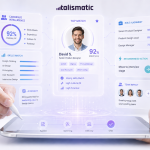
Talismatic acts as an intelligence layer on top of your existing hiring systems, transforming how candidates are evaluated between “Apply” and “Interview.”
Instead of relying on manual screening, it brings structure and clarity into this stage. Recruiters can identify best-fit candidates, understand why they are recommended, and act with confidence.
It also enables candidate rediscovery, ensuring strong profiles from past pipelines don’t get lost.
What was once a blind spot becomes a decision-ready layer.
And that fundamentally changes how hiring teams operate.
The Future of the “Apply to Interview” Stage
This gap won’t disappear on its own.
But it will evolve.
As more organizations adopt AI hiring platforms, this stage will become more visible, structured, and aligned with business outcomes.
Recruiters will spend less time interpreting data and more time making decisions. Hiring managers will gain better visibility into candidate fit. And candidates will experience a process that feels faster and more intentional.
Closing Thought
The most important hiring decisions are often made before the first interview.
Yet for years, that stage has been the least optimized.
The hidden hiring gap is not just a process issue. It’s a decision problem.
And solving it isn’t about adding more steps. It’s about introducing intelligence where it matters most.
If you’re looking to bring clarity, consistency, and better decision-making into this stage, it might be time to see how that works in practice.
Book a FREE demo with Talismatic and experience how an AI-powered decision layer can transform your hiring outcomes.